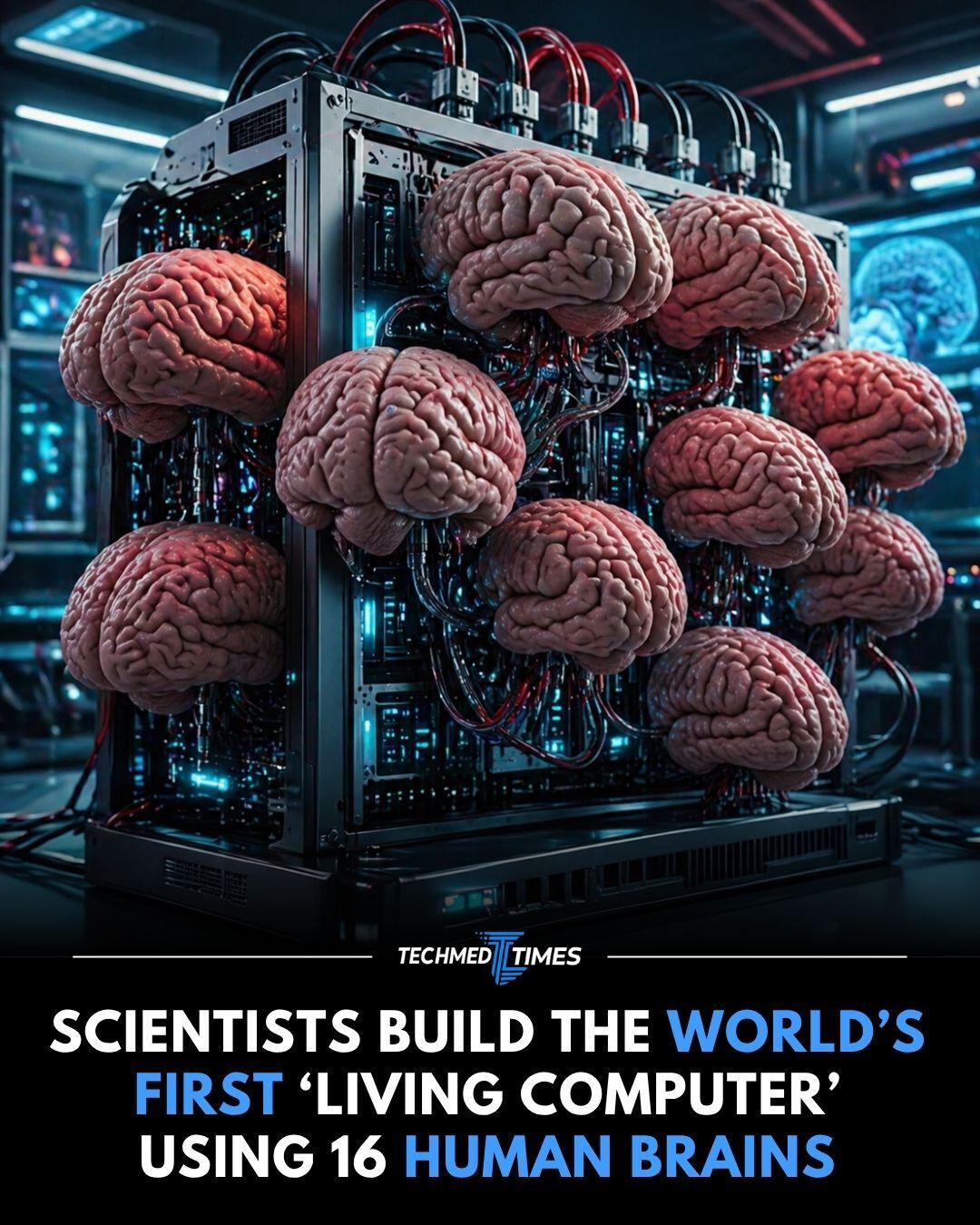
In an extraordinary leap for science, researchers have created the world’s first “living computer” by using 16 human brains. This astonishing development has the potential to change everything we know about computing, blending biology and technology in a way never seen before.
Unlike traditional computers that rely on silicon chips and artificial circuits, this living computer uses real biological tissue to process information. The brains are interconnected in a way that mimics how our own neural networks function, creating a system capable of complex, adaptive thinking. It’s a truly mind-boggling fusion of neuroscience and artificial intelligence that pushes the boundaries of what’s possible in both fields.
While the concept of a biological computer sounds like science fiction, this breakthrough is grounded in reality. The “living” component of the computer allows it to learn, adapt, and solve problems in ways traditional machines cannot. Scientists hope this will lead to the development of more advanced AI systems that can think and process information with greater efficiency.
This raises important questions about the future of computing. Could biological computing one day replace traditional machines? What ethical concerns will arise as we continue to merge biology with technology? While this technology is still in its infancy, its potential is enormous, and it could pave the way for futuristic innovations we’ve only dreamed of.
As this groundbreaking research continues, the implications for AI, neuroscience, and technology are profound. The future is indeed living.