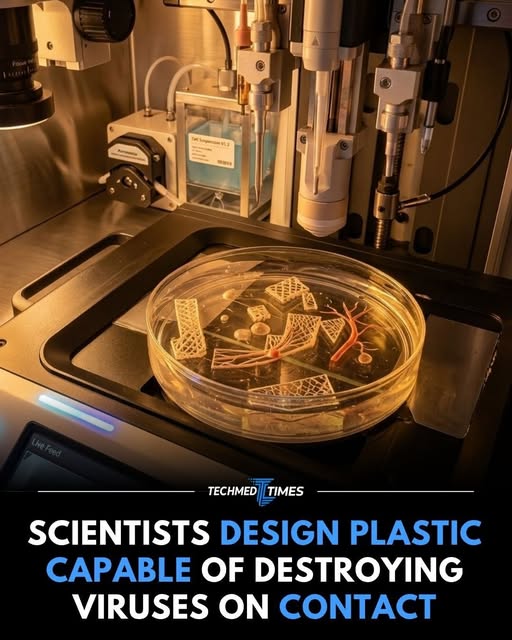
Scientists have recently developed an innovative type of plastic capable of destroying viruses on contact—a discovery that could significantly reshape how we approach hygiene and disease prevention. This advanced material offers a promising and practical solution to reducing the spread of harmful pathogens in daily life, from mild infections like the common cold to more serious viral illnesses.
The concept is simple yet powerful. Imagine frequently touched surfaces—such as smartphones, door handles, shopping carts, or public transport rails—being made from a material that actively neutralizes viruses. Instead of acting as carriers for germs, these surfaces could become protective barriers, helping to minimize transmission in environments where contamination is most likely.
What makes this plastic particularly impressive is the science behind it. The material is engineered with antiviral properties that interact directly with virus particles. Upon contact, it disrupts the outer structure of viruses, effectively breaking them down and preventing them from infecting another person. Unlike traditional cleaning methods that require constant reapplication, this type of surface offers continuous protection.
This development could have far-reaching implications for public health. In hospitals and clinics, it could reduce the risk of infections spreading between patients and healthcare workers. In schools, offices, and public transportation systems, it could provide an added layer of safety in high-traffic areas. Even in households, integrating such materials into everyday products could support better hygiene practices with minimal effort.
Although the idea may sound futuristic, researchers are actively working to refine and scale this technology for real-world use. As with any new material, further testing is needed to ensure durability, safety, and cost-effectiveness before it becomes widely available.
Still, this breakthrough highlights how science continues to evolve in response to global health challenges. By turning ordinary surfaces into active defenders against viruses, this innovation represents a meaningful step toward creating cleaner, safer environments for everyone.