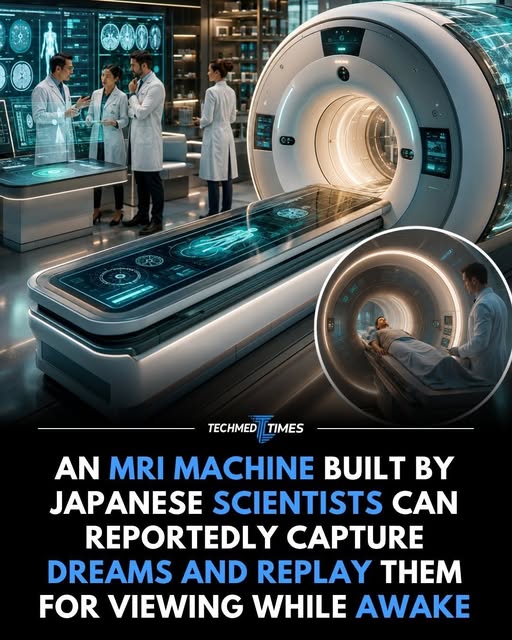
For centuries, dreams have fascinated humanity, appearing like mysterious movies that play inside the mind while we sleep and then vanish moments after we wake up. A vivid dream can sometimes feel completely real for a few seconds, only to fade away before we can fully remember it. Now, scientists in Japan are developing technology that once sounded like pure science fiction: the ability to recreate visual fragments of human dreams using advanced brain scanning and artificial intelligence.
Researchers are using highly sophisticated MRI technology to observe brain activity while volunteers sleep. These scanners track blood flow and neural activity in different regions of the brain during dreaming. Artificial intelligence systems then compare those brain patterns with enormous image databases in an attempt to predict what the sleeping person may have seen inside their dream. Early experiments have reportedly shown surprisingly accurate results when identifying basic objects, shapes, movements, and simple scenes.
Although the technology is still far from producing a perfect “dream movie,” experts say the progress is remarkable. Scientists believe this research could completely transform the way humans understand memory, emotions, imagination, trauma, and even consciousness itself. Dreams have long remained one of the least understood parts of the human mind, and this technology may provide researchers with an entirely new window into how the brain processes experiences and emotions during sleep.
The potential medical applications are especially attracting attention. Doctors believe dream-analysis technology could someday help patients suffering from PTSD, anxiety disorders, depression, recurring nightmares, and other mental health conditions. By studying dream patterns more closely, specialists may better understand emotional stress and hidden psychological triggers that are difficult to detect during normal conversations or medical evaluations.
At the same time, the idea also raises serious ethical and privacy concerns. Many people are excited by the possibility of revisiting forgotten dreams or even sharing dream experiences with others, but some experts warn that reading visual thoughts from the brain could eventually create new debates about mental privacy and personal freedom. If technology continues advancing rapidly, questions about who can access brain data — and how it could be used — may become one of the biggest discussions of the future.
For now, scientists emphasize that the technology remains experimental. Still, what once seemed impossible is slowly becoming reality, opening the door to a future where dreams may no longer disappear in silence after we wake up.