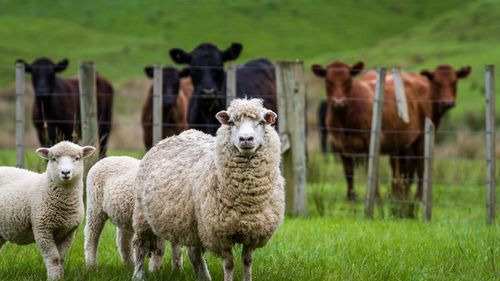
Rural Life Around Kumanovo and Lipkovo
Travelers visiting Kumanovo often first notice the city centre, restaurants and cultural landmarks. But outside the urban area, agriculture and livestock farming remain an important part of everyday life.
The plains, villages, pastures and mountain areas around Kumanovo and Lipkovo create a rural landscape where crop production and animal husbandry have long played an important role.
For visitors interested in local life, food and traditional ways of living, exploring the countryside provides another perspective on the Kumanovo region.
Agriculture Around Kumanovo
Kumanovo Municipality covers a large territory extending far beyond the city itself.
Municipal profile data identifies approximately 51,698 hectares of agricultural land, including around 26,598 hectares of cultivable land. The municipality also has more than 25,000 hectares of pastures. Ruralnet
These figures help explain why agriculture remains highly visible once you leave central Kumanovo.
Fields can be seen around villages such as Romanovce, Umin Dol, Tabanovce, Dolno Konjare and other rural settlements.
What Is Grown Around Kumanovo?
The agricultural landscape is diverse.
Among the commonly identified agricultural activities are:
- Grain production
- Vegetable and garden crops
- Orchards
- Vineyards
- Grapes and wine production
- Fodder crops for livestock
The continental climate of the Kumanovo valley also supports crops such as maize and vegetables. doczz.net
Agricultural activity changes throughout the year, so the landscape may look very different depending on the season.
Farming in Lipkovo
Agriculture is particularly important in Lipkovo Municipality, where villages and farmland form a much larger part of the landscape than dense urban development.
A municipal profile lists approximately 7,456 hectares of agricultural area, including 6,912 hectares of cultivable land.
The most widespread production includes grains, vegetables and fodder crops. Ruralnet
The municipality also contains extensive forests and mountain areas, connecting agriculture with the wider Karadak landscape.
Water and Agriculture in Lipkovo
Water has an especially important relationship with agriculture in this area.
Lipkovo Lake and Glaznja Lake are not only scenic reservoirs. The wider reservoir system has also been used for irrigation and water supply.
A regional infrastructure assessment describes agricultural land in Lipkovo as partly irrigated through the Lipkovo hydro-system. roads.org.mk
This is one reason the lakes are important not only as landscapes but also to the communities and agricultural production surrounding them.
Livestock Farming
Crop production is only one side of rural life.
Animal husbandry has traditionally included:
- Cattle
- Sheep
- Goats
- Poultry
- Pigs in parts of the wider Kumanovo area
The large areas of pasture around Kumanovo help support livestock farming, while the hills and mountain terrain surrounding Lipkovo and Karadak are naturally connected with grazing and smaller-scale animal production. Ruralnet
Across North Macedonia more broadly, cattle farming links crop production with milk and meat production, while sheep farming remains associated with milk, cheese and lamb production. Ruralnet
Cattle Farming
Cattle remain important to many agricultural households because they provide milk as well as animals for meat production.
On smaller family farms, cattle may be kept alongside fields used to produce maize, hay and other animal feed.
This creates a traditional farming cycle in which crop production and livestock farming support one another.
Visitors driving through rural areas may see cattle sheds, hay storage and fields dedicated to fodder production.
Sheep and Goats
The hillier landscape around the broader Kumanovo and Lipkovo region is also suitable for sheep and goats.
Sheep farming has a long tradition in North Macedonia, particularly in areas with hills, mountains and natural pasture.
Sheep milk is used for dairy products including different types of cheese, while lamb production also has economic importance nationally. Ruralnet
In mountain villages, livestock farming can still form part of the rhythm of everyday rural life.
Villages and Family Farms
Much of the agricultural character of the region is connected with family farms rather than enormous industrial agricultural complexes.
A household may combine several activities:
- Growing vegetables
- Producing grain
- Keeping cattle
- Raising sheep or goats
- Keeping chickens
- Producing hay
- Maintaining fruit trees
- Growing food for family use
The exact type of farming depends on the village, available land and local conditions.
Agriculture and Albanian Villages in Lipkovo
In Lipkovo, agriculture is closely connected with the predominantly Albanian rural communities of the municipality.
Villages including Lipkovo, Matejče, Slupčane, Otlja, Vaksince and Lojane are part of a landscape where fields, family properties and livestock can be seen alongside homes, mosques and local businesses.
The municipality profile identifies about 96.65% of its population as Albanian, making Albanian rural culture an important part of the identity of this area. Ruralnet
For visitors, this provides another opportunity to understand the cultural diversity of the wider Kumanovo region.
Local Food Begins on the Farm
Agriculture and livestock are also directly connected with the food travelers encounter in Kumanovo.
Many familiar regional foods rely on agricultural products such as:
- Tomatoes
- Peppers
- Beans
- Cabbage
- Potatoes
- Wheat
- Maize
- Milk
- Cheese
- Meat
- Eggs
Traditional meals therefore tell part of the story of the countryside surrounding the city.
A restaurant meal in Kumanovo may feel very different once you understand where many of the basic ingredients traditionally come from.
Seasonal Agriculture
The countryside changes throughout the year.
Spring
Fields become greener, planting increases and livestock spends more time outdoors.
Summer
Vegetable production becomes highly visible and many crops are growing or being harvested.
Autumn
Harvesting, fruit production and preparation for winter become more noticeable.
Winter
Agricultural activity becomes less visible outdoors, particularly in the mountain areas, while livestock requires more stored feed and shelter.
For photographers and visitors interested in rural landscapes, each season provides a different experience.
Agricultural Markets
One of the easiest ways for a visitor to experience local agriculture is through markets.
Fresh vegetables, fruit and other products sold in and around Kumanovo often reflect seasonal agricultural production.
Markets provide a connection between rural producers and urban consumers and remain an important part of everyday life.
Visitors looking for a more local experience should consider visiting a market rather than shopping only in supermarkets.
Organic and Traditional Food
Kumanovo also hosts agricultural events.
In October 2026, the city hosted both the international Organic Table 2026 fair for organic and traditional products and AGROMAK 2026, focused on agriculture, technology, food and processing.
The events bring together producers, companies, institutions and local communities, showing that agriculture continues to have an important economic and cultural role in the area. Kumanovo Municipality
Responsible Visits to Rural Areas
Visitors are welcome to enjoy the countryside, but farmland is not automatically public land.
When exploring rural Kumanovo or Lipkovo:
- Do not enter fields without permission
- Do not disturb livestock
- Keep dogs away from farm animals
- Never open farm gates
- Ask before photographing farmers
- Drive slowly through villages
- Respect agricultural machinery on rural roads
- Do not leave rubbish
Farmers are working, even when the landscape looks picturesque to a visitor.
Farm-to-Table Potential
Agriculture also creates opportunities for rural tourism.
Local food, traditional meals, farm products and village experiences could become an increasingly interesting part of tourism around Kumanovo and Lipkovo.
Rather than focusing only on monuments, visitors may also be interested in discovering how local food is grown, how animals are raised and how traditional rural communities live.
This type of tourism can help connect visitors directly with local producers.
More Than a City
Understanding Kumanovo means looking beyond its urban centre.
The city is surrounded by one of the larger agricultural landscapes in the area, while neighboring Lipkovo combines farmland with forests, lakes, villages and the mountains of Karadak.
Agriculture, livestock farming and rural communities therefore form an important part of the identity of the region.
For travelers interested in authentic local life, the fields, farms and villages of Kumanovo and Lipkovo can be just as interesting as the better-known tourist attractions.
Be the first to comment