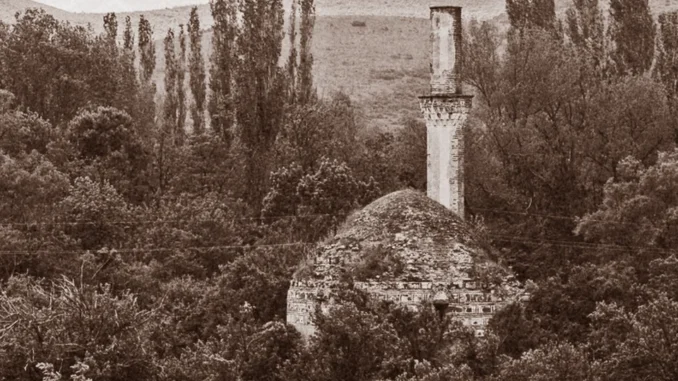
Only a short distance from the border crossing between North Macedonia and Serbia stands one of the most interesting historic religious landmarks in the Kumanovo region — the Koxha Mehmet Bey Mosque in Tabanoc.
Although the building represents an important part of the area’s cultural and religious heritage, it has faced years of deterioration and concerns about its long-term preservation.
A Centuries-Old Landmark Near the Border
The mosque is located in the village of Tabanoc, north of Kumanovo and close to the main highway leading toward Serbia.
Historical accounts describe the building as one of the oldest Islamic religious structures in the wider region. Its exact construction date, however, has been reported differently over the years, and reliable documentation about its earliest history remains limited.
What is clear is that the mosque has existed for centuries and represents an important reminder of the communities that lived in and passed through this part of the Balkans.
One of its most recognizable elements is its old minaret, which has attracted particular attention because of its architectural and historical character.
A Building That Has Been Inactive for Generations
For a long period, the mosque was no longer regularly used for religious services.
Older reports about the site noted that the call to prayer had not been heard from its minaret for more than a century.
Without regular use and continuous maintenance, the building gradually began to deteriorate.
Walls, structural elements, and parts of the surrounding area were increasingly exposed to weather conditions and the effects of time.
This created growing concern among local residents and representatives of the religious community about the future of the historic structure.
Protected as Cultural Heritage
Despite its condition, the mosque has been recognized for its cultural and historical importance.
According to previously published information, the building was placed under legal protection as a cultural heritage monument in 2008.
Such protection is intended to prevent unauthorized alterations and ensure that any restoration work follows conservation standards.
The mosque has also been listed among religious buildings recognized for their cultural importance in North Macedonia.
Legal protection, however, does not automatically guarantee immediate restoration.
Historic buildings often require extensive documentation, professional assessments, architectural plans, and approval from several institutions before conservation work can begin.
Concerns About the Surrounding Land
One of the challenges surrounding the mosque has been the condition and use of the land around it.
Although the building is situated relatively close to the highway, access to the mosque has historically been difficult.
Agricultural land extends close to the structure, and earlier reports raised concerns that farming activities had reached areas near the foundations of the building.
For historic structures, changes to the soil surrounding the foundations can become an additional conservation concern.
Preserving the immediate surroundings of a monument can therefore be just as important as restoring the building itself.
The Importance of the Mosque’s Property
Representatives of the Kumanovo Muftiate have previously emphasized that resolving the status of the land belonging to the mosque is an important part of any long-term restoration effort.
Clear ownership and protection of the surrounding property can help create the conditions necessary for conservation work, improved access, and proper maintenance of the site.
The mosque is administered by the Islamic religious community through the Kumanovo Muftiate.
Over the years, representatives of the community have repeatedly expressed interest in preserving the building and protecting its historic identity.
Plans for Conservation and Restoration
Earlier reports indicated that cultural heritage institutions were preparing documentation and conservation plans for the mosque.
Restoring a structure of this age requires significantly more than ordinary construction work.
Specialists must first examine the condition of the foundations, stonework, roof, walls, minaret, and decorative architectural elements.
Original materials should be preserved whenever possible, while damaged sections need to be repaired using techniques that respect the historical character of the building.
The objective of conservation is therefore not to create a modern-looking structure, but to preserve as much authentic material as possible.
Why Historic Religious Buildings Matter
Historic mosques, churches, monasteries, bridges, and traditional houses form an important part of the cultural landscape of the Balkans.
Their significance extends beyond religion.
They provide information about architecture, craftsmanship, settlement patterns, community life, and the social history of earlier generations.
For villages such as Tabanoc, preserving an important historic monument can also strengthen local identity and create opportunities for educational and cultural tourism.
Visitors traveling through the Kumanovo region could potentially learn more about the history of the area through carefully restored and properly documented heritage sites.
A Link Between Tabanoc and Kumanovo’s Wider History
The Koxha Mehmet Bey Mosque is also connected to a broader story of Islamic architectural heritage in the Kumanovo region.
Kumanovo itself contains several historic religious buildings, including the Tatar Sinan Pasha Mosque, another important monument associated with the region’s Ottoman-era history.
Together, these buildings demonstrate how different historical periods have shaped the architecture and cultural identity of northern North Macedonia.
Each monument tells a different part of that story.
Preserving Heritage for Future Generations
The condition of the Koxha Mehmet Bey Mosque highlights the wider challenge of protecting historic monuments.
Buildings that have survived for centuries can quickly deteriorate when regular maintenance is interrupted.
Successful restoration normally requires cooperation between cultural heritage authorities, religious communities, local institutions, conservation specialists, and the wider community.
Preserving such monuments is not simply about repairing old walls.
It is about protecting the historical memory of a place and ensuring that future generations can understand the people, architecture, and traditions that shaped the region.
Today, the historic mosque in Tabanoc remains an important symbol of the village’s past.
Its preservation would help protect a valuable piece of the cultural heritage of the Kumanovo region and ensure that this centuries-old landmark continues to tell its story for generations to come.
Be the first to comment