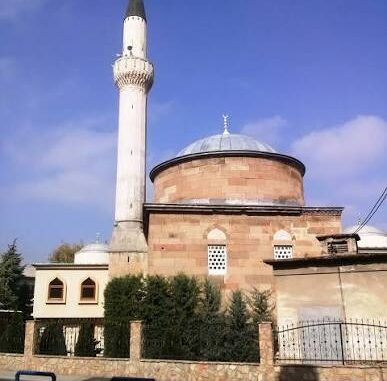
In the heart of Kumanovo stands one of the city’s best-known examples of Islamic heritage, the Tatar Sinan Pasha Mosque, also commonly referred to by local residents as the “Old Mosque.” Its history is closely connected to the development of Kumanovo and to the religious and social life of the local community over several centuries.
A History Passed Down Through Generations
Written historical records about the earliest period of the mosque are limited. Because of this, part of its history has been preserved through oral traditions, local stories, and accounts passed down by generations of residents and religious leaders.
According to local tradition, the mosque is associated with Tatar Sinan Pasha, an important figure from the Ottoman period. The original building is believed to have been constructed in 1532, at a time when Kumanovo was a much smaller settlement than it is today.
The first structure was relatively modest in size, reflecting the population of the town during that period. Over the centuries, as Kumanovo expanded and the local population increased, the mosque was maintained and enlarged to meet the needs of the community.
Distinctive Architectural Features
The Tatar Sinan Pasha Mosque is also notable for its architectural characteristics. The historic section of the building contains decorative elements created from stone and marble.
The mihrab, minbar, windows, and other parts of the structure feature traditional architectural details associated with the period in which the mosque was built.
These elements make the mosque interesting not only as a place of worship, but also as a cultural and architectural landmark for visitors and researchers interested in the heritage of Kumanovo.
Because of its historic importance, later renovations were carried out with the intention of preserving the character of the original structure as much as possible.
Renovation and Expansion Over the Years
As the number of worshippers increased, the mosque underwent several phases of expansion.
According to information previously shared by representatives of the Kumanovo Muftiate, major renovation and expansion works were carried out in 1987 and again in 2008.
In addition to changes inside the building, improvements were also made to the courtyard and surrounding areas.
The purpose of these works was to provide adequate space for religious activities while protecting the historical features of the older part of the mosque.
Old graves were also once located around the mosque. Some were believed to be more than a century old, showing that the area has had long-standing importance for the local community.
More Than a Place of Worship
Throughout history, mosques have often served functions beyond religious worship.
They were also places where educational, social, and charitable activities were organized.
The Tatar Sinan Pasha Mosque played a similar role in Kumanovo.
For many years, religious education for children was organized there, including basic Islamic teachings and lessons in reading the Quran.
The mosque also served as a gathering point for charitable initiatives and community support.
During the month of Ramadan, residents traditionally organized assistance for families in need, including charitable donations and other forms of community support.
As humanitarian organizations and dedicated educational institutions became more widespread, some of these activities gradually moved outside the mosque.
Supporting People During Difficult Periods
The mosque has also played a humanitarian role during several difficult periods in the recent history of the region.
During the Kosovo refugee crisis in 1999, members of the local community helped provide assistance to displaced people.
Similar support was offered during the events of 2001, when many people were temporarily displaced and required help.
Working together with local religious institutions and residents, the community provided food, guidance, temporary support, and other forms of assistance.
During later refugee and migration movements through North Macedonia, religious institutions and humanitarian groups in the region also contributed to helping people in need.
An Important Part of Kumanovo’s Heritage
Over the years, the area surrounding the Tatar Sinan Pasha Mosque has changed significantly, just as Kumanovo itself has developed.
The courtyard has been renovated, the building has been maintained, and the number of visitors and worshippers has increased.
However, the importance of the mosque goes beyond its religious function.
It represents an important part of the urban history of Kumanovo and serves as a reminder of the different historical periods through which the city has passed.
Other Historic Mosques in the Kumanovo Region
The Kumanovo region is also home to other historic Islamic religious buildings.
One of them is the Koxha Mehmet Bey Mosque in Tabanoc, which has also been recognized for its cultural and historical importance.
Preserving and restoring historic structures such as these requires cooperation between cultural heritage institutions, religious communities, local authorities, and conservation experts.
Today, the Tatar Sinan Pasha Mosque remains one of the most recognizable examples of Islamic heritage in Kumanovo.
For many residents, it is not only a place of worship but also a historic monument that connects the city’s past with its present and preserves an important part of Kumanovo’s cultural memory.
Be the first to comment