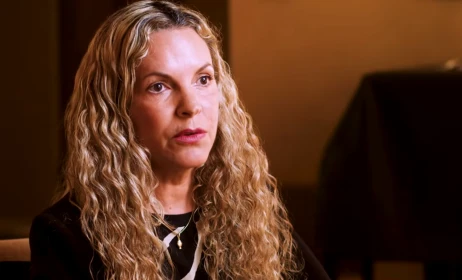
Former NASA-Associated Scientist Shares Her Near-D.ҽ.ᶏ.th Experiences and How They Shaped Her View of Life
A Personal Story That Sparked a Lifelong Search for Answers
Questions about consciousness, life, and what may happen after D.ҽ.ᶏ.th have fascinated humanity for centuries. While science continues to explore the nature of the human brain and awareness, personal accounts of near-D.ҽ.ᶏ.th experiences remain a subject of widespread interest and debate.
One individual who has spoken publicly about her experiences is Ingrid Honkala, a marine scientist who has collaborated on scientific projects and says she has undergone three near-d.ҽ.ᶏ.th experiences throughout her life. According to her account, these events profoundly influenced the way she views consciousness, human existence, and the relationship between science and spirituality.
It is important to note that experiences of this kind are deeply personal and subjective. While many people find such stories meaningful, researchers continue to study the neurological and psychological explanations behind them.
LEXO EDHE

An Experience That Began in Early Childhood
According to Honkala, her first near-dҽᶏth experience occurred when she was only two years old.
She recalls falling into a water reservoir near her family’s home and losing consciousness before being rescued. Although she survived the incident, she says the experience left a lasting impression that remained vivid throughout her life.
In interviews discussing the event, Honkala has described feeling an overwhelming sense of calm after an initial moment of fear. She claims that her awareness seemed separate from her physical body and that she experienced a profound sense of connection and peace.
LEXO EDHE

While such descriptions are common among people reporting near-dҽᶏth experiences, scientists emphasize that memories formed during traumatic situations can be complex and difficult to verify objectively.
Common Themes in Near-dҽᶏth Experiences
Honkala’s account includes several elements that have frequently appeared in reports from people around the world who have experienced life-threatening situations.
Some commonly reported features include:
A feeling of peace or calm
A sense of detachment from the physical body
Altered perception of time
Enhanced awareness or clarity
Experiences involving light or feelings of connection
Researchers have documented these recurring themes across different cultures and belief systems. However, interpretations vary significantly depending on personal background, religious beliefs, and individual perspectives.
Additional Life-Threatening Events
Honkala has stated that she later experienced two more near-dҽᶏth episodes during adulthood.
According to her accounts, one occurred following a serious motorcycle accident, while another happened during a medical procedure when her blood pressure reportedly dropped to critical levels.
She has said that all three experiences shared similar characteristics, including feelings of peace and expanded awareness.
These recurring experiences eventually motivated her to explore deeper questions about consciousness and reality, both through personal reflection and scientific inquiry.
Science and the Study of Consciousness
One reason Honkala’s story attracts attention is her scientific background.
Rather than viewing science and spirituality as opposing forces, she has suggested that both attempt to explore fundamental questions about existence, although from different perspectives.
The scientific community continues to investigate consciousness through fields such as neuroscience, psychology, cognitive science, and medicine. Researchers study how brain activity relates to perception, awareness, memory, and subjective experience.
While science has made significant progress in understanding the brain, many aspects of consciousness remain topics of ongoing research.
What Do Scientists Say About Near-Dҽath Experiences?
Scientists have proposed several possible explanations for near-dҽath experiences.
Some theories suggest that these experiences may result from:
Changes in brain activity during extreme stress
Reduced oxygen levels in the brain
Neurological responses to trauma
Memory reconstruction processes
Psychological coping mechanisms
Researchers continue to examine these possibilities, and there is currently no universal scientific consensus regarding the exact causes of all near-dҽath experiences.
Because these events occur under extraordinary circumstances, studying them presents unique challenges.
Why These Stories Continue to Fascinate People
Stories like Honkala’s capture public attention because they touch on questions that affect nearly everyone. People naturally wonder about consciousness, identity, and what it means to be alive.
Whether viewed through a scientific, philosophical, or spiritual lens, near-dҽath experiences often encourage reflection on life’s priorities, relationships, and personal beliefs.
Many individuals who report such experiences describe lasting changes in their outlook, including increased appreciation for life, stronger feelings of connection with others, and reduced fear of dҽath.
Conclusion
Ingrid Honkala’s account of three near-dҽath experiences offers a fascinating perspective on one of humanity’s oldest mysteries. While her descriptions reflect personal experiences and beliefs rather than scientifically verified conclusions, they contribute to an ongoing conversation about consciousness and the nature of human awareness.
As researchers continue to investigate the brain and consciousness, stories like these remain an intriguing intersection of science, personal experience, and philosophy. Regardless of how one interprets them, they encourage thoughtful discussion about some of life’s most profound questions.